



Texas storms damage residential plumbing through sewer line backups, underground pipe shifts, burst pipes during freezes, cracked outdoor fixtures from hail, and hidden slab leaks caused by ground flooding. For Arlington homeowners, this happens every storm season, and the damage is not always visible right away.
If you have lived in North Texas long enough, you know how fast the weather can turn. One afternoon it is clear. By evening there is a thunderstorm watch, hail, and water moving fast down every street. Most homeowners think about their roof. Their car. But the plumbing rarely crosses anyone’s mind, and that is exactly when problems develop quietly until they become expensive.
Knowing what Texas storms can do to your plumbing, and what warning signs to look for afterward, can save you from a repair bill that runs into the thousands.
Why Arlington’s Weather Is Especially Hard on Plumbing
Arlington sits in Tarrant County, right in the middle of one of the most weather-active regions in the country. North Texas sees severe thunderstorms from March through June, flash flooding near Johnson Creek and the Trinity River watershed, winter freezes that arrive fast, and hailstorms that come with almost no warning.
What makes this especially damaging for plumbing is the soil. Arlington sits on Blackland Prairie clay, a type of soil that expands when it gets wet and contracts when it dries out. That constant ground movement puts pressure on underground pipes, shifts slab foundations, and turns small vulnerabilities into serious problems.
The February 2021 winter storm is a clear example. Sustained below-freezing temperatures caused burst pipes throughout thousands of Arlington properties. Older homes, newer builds, everything in between. It was not a fluke. It was a preview of what plumbing built for Texas heat goes through when extreme cold arrives with no time to prepare.
How Texas Storms Damage Your Home’s Plumbing System
Flash Flooding Causes Sewer Line Backups
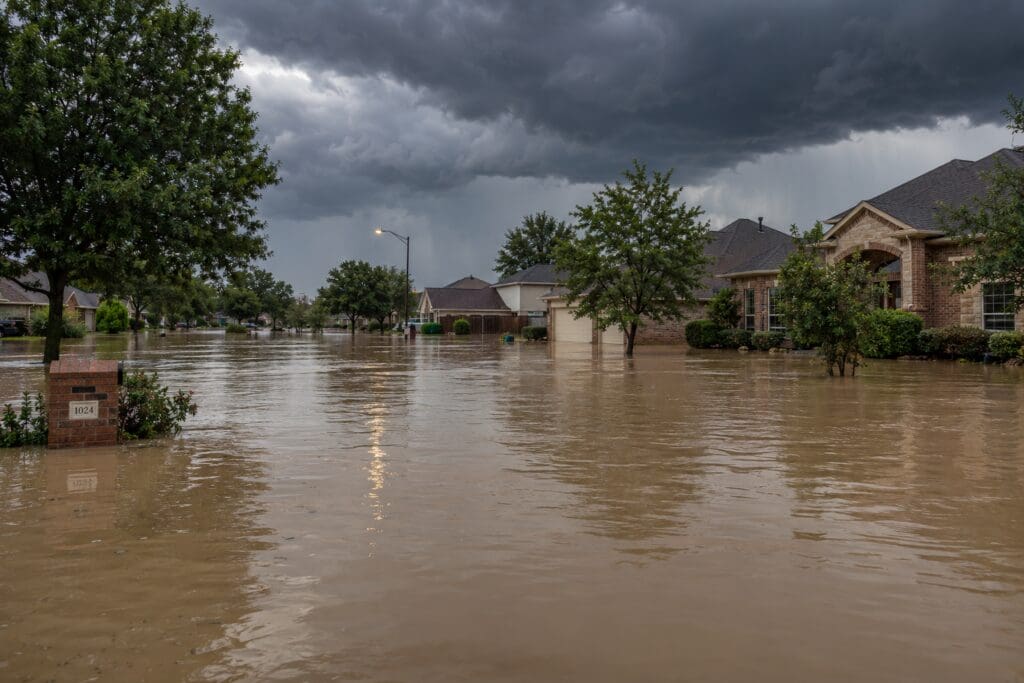
When heavy rain hits Arlington fast, the municipal sewer system gets overwhelmed. Stormwater floods into the sewer lines and that pressure has to go somewhere. It frequently pushes back up through the lowest drains in your home, including floor drains, toilets, and tub drains on the lower level.
This is called a sewer backup. Sewage coming up through your drains is not just unpleasant. It is a health hazard that needs immediate professional attention.
If your home sits near a low-lying area or the Trinity River corridor, your risk increases significantly during heavy rain events. Signs to watch for include:
- Slow drains throughout the house, not just one fixture
- Gurgling sounds from toilets or floor drains
- A sewage odor coming from any drain
- Water backing up in the tub or shower
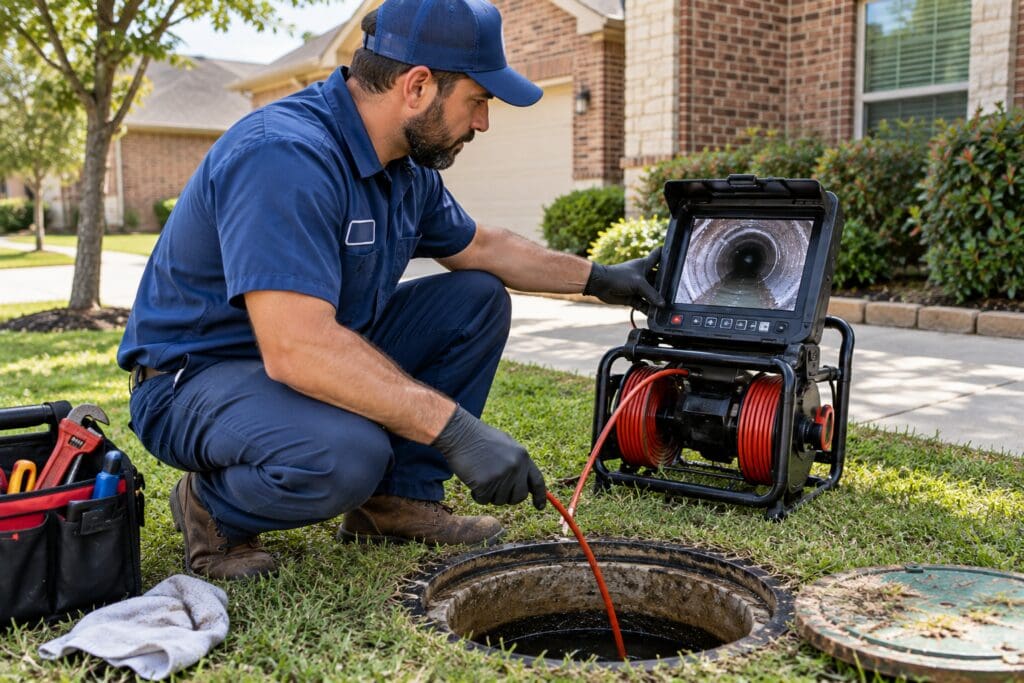
Any one of these after a storm is worth taking seriously. Our sewer line repair services include camera inspections that confirm whether storm flooding has caused damage before it becomes a full backup.
Saturated Soil Shifts Underground Pipes
After a major storm, the ground around your home absorbs an enormous amount of water. Arlington’s clay-heavy soil expands when saturated and creates lateral pressure on buried sewer lines and water supply pipes.
As the ground swells and then contracts as it dries, underground pipes move with it. That movement causes joint separations, cracks, and in older pipes, complete breaks. Cast iron and clay pipes, common in older Arlington homes, are especially vulnerable to this kind of stress.
The problem is that underground pipe damage is rarely obvious right away. Signs tend to appear gradually in the days after a storm:
- Soft or sunken spots in the yard
- Patches of grass noticeably greener than the rest
- Drains that stay slow even after everything else has dried up
- A persistent sewage smell near the yard
If you are seeing any of those, a sewer camera inspection is the most reliable way to find out what is happening without digging up the yard unnecessarily.

How Texas Storms Damage Pipes During Winter Freezes
Texas homeowners have learned this one the hard way. When temperatures drop below freezing and stay there for more than a few hours, pipes are at serious risk.
Homes in Arlington were built for heat management, not cold protection. Pipes in attics, exterior walls, and garages often have little to no insulation. When temperatures drop fast overnight, which is typical in North Texas, those exposed pipes freeze. Water expands when it freezes and has nowhere to go inside a rigid pipe. The pipe gives way.
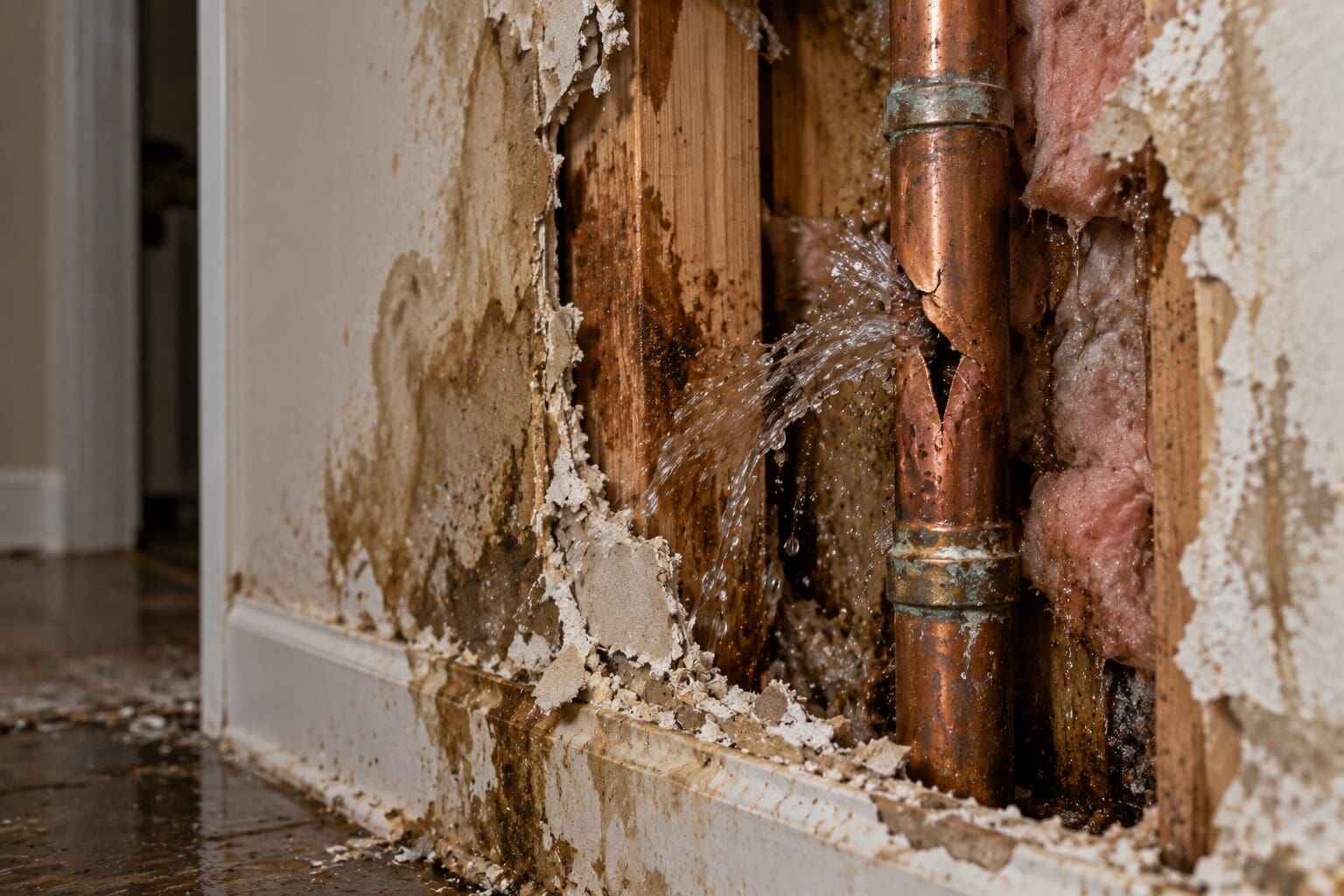
A burst pipe can release hundreds of gallons of water inside your home before you notice anything is wrong. After any freeze event, watch for:
- No water from a faucet after below-freezing temperatures
- Visible frost or bulging on an exposed pipe
- Water stains appearing on ceilings or walls
- The sound of running water inside a wall with every fixture off
Before the next freeze warning: disconnect and drain outdoor hoses, locate your main water shutoff, and open cabinet doors under sinks on exterior walls so warm air can circulate. If you are leaving town during a cold snap, keep the thermostat at 55 degrees or above.
If a pipe does burst, our team handles emergency plumbing repairs around the clock.
Hailstorms Crack and Loosen Outdoor Plumbing Fixtures
Hail is something Arlington deals with every spring. While most attention goes to roofs and vehicles, hailstorms also damage outdoor plumbing components that are directly exposed to impact.
Outdoor hose bibs, irrigation heads, backflow preventers, and exposed pipe connections are all vulnerable when large hail comes through. Impact damage can crack fittings or loosen connections without obvious signs until water starts pooling in the yard or your bill climbs for no clear reason.
After any significant hailstorm, check:
- Outdoor faucets and hose bibs for cracks or dripping
- Irrigation heads for breakage or misalignment
- The backflow preventer for visible damage
- Exposed pipe connections along the home’s exterior
Catching a cracked fitting early is a minor repair. Letting it go unnoticed for weeks is not.
Ground Flooding Creates Pressure on Slab Plumbing
This affects most Arlington properties, since the majority of homes here are built on slab foundations.
When the ground around and beneath a slab becomes completely saturated, water pressure builds underneath the foundation. That pressure can force water up through small cracks in the concrete or push against connections where plumbing passes through the slab. Over time, this leads to slab leaks, which means water escaping from pipes buried beneath your foundation.
Slab leaks are difficult to detect because the damage happens below where anyone can see it. The first signs are often subtle:
- A section of flooring that feels warm underfoot
- A water bill higher than normal with no clear explanation
- The sound of running water with every fixture turned off
- Cracks developing in interior walls or flooring
If you notice any of those after a heavy storm, do not wait. Our gas and slab leak repair team uses detection equipment that locates the source without tearing up your floors to find it. Slab leaks get worse on their own.
What Arlington Homeowners Should Do After a Major Storm
You do not need to inspect everything after every storm. But a quick check after Texas storms damage your area can catch problems before they get expensive.
Right after the storm clears:
- Walk the yard and look for pooling water, soft ground, or sunken spots that were not there before
- Check outdoor faucets and visible pipe connections for damage
- Run water through drains inside and listen for gurgling sounds
- Look under sinks and around toilets for moisture or new water stains
In the days following:
- Monitor your water meter. Turn off all water in the home and watch the meter for two minutes. If it is still moving, there is a leak somewhere in the system
- Watch for slow drains that do not clear on their own, which can point to a clogged or damaged drain line
- Pay attention to any new odors coming from drains
When to call a licensed plumber:
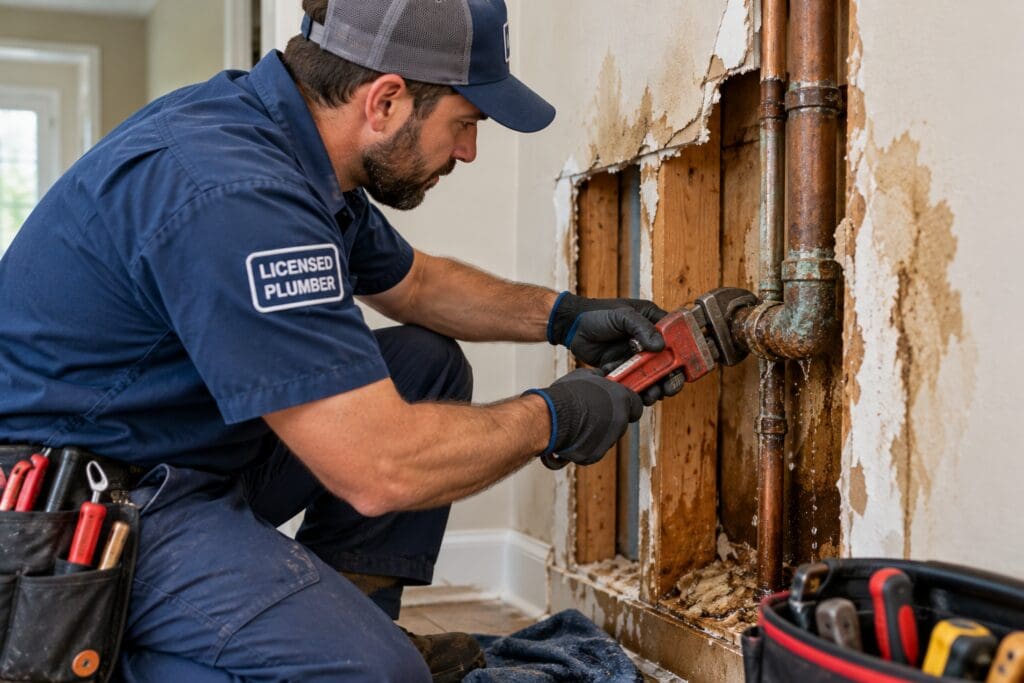
Call right away if you see sewage backing up into any fixture, drains are slow throughout the house rather than just one, you suspect a burst pipe or see water damage on ceilings or walls, or your water bill has gone up without explanation. These issues do not resolve on their own, and a licensed plumber has the tools to find the source without opening walls or digging up the yard.
How Made’s Plumbing Helps Arlington Homeowners After Storm Season
At Made’s Plumbing, we have seen firsthand what Texas weather does to residential plumbing. Ben Garcia, our master plumber and owner, comes from a family of plumbers and has been working with Arlington homeowners long enough to know exactly what storm-related damage looks like, and how to fix it correctly the first time.
After a major storm, our team handles:
- Sewer camera inspections to locate underground damage without unnecessary digging
- Sewer line repair and trenchless sewer line replacement
- Burst pipe repair and pipe replacement
- Slab leak detection and repair
- Emergency plumbing services for issues that cannot wait
- Drain cleaning to clear storm-related blockages
We offer free estimates. Most storm-related problems are far easier and less expensive to fix when caught early. If something feels off after a recent storm, that is worth a phone call.
Storm Damage Does Not Wait, and Neither Should You
Storm-related plumbing damage almost never stays the same size. A sewer crack gets wider. A pipe under soil pressure eventually fails. A slab leak ignored for a month leads to flooring damage, foundation problems, and mold. What a plumber fixes in two hours becomes a two-week job.
You do not need to be certain something is wrong to make the call. Call Made’s Plumbing at (817) 962-2257 or schedule your free inspection online. No upselling. No guesswork. Just a straight answer from a licensed master plumber who knows Arlington plumbing inside and out.
Frequently Asked Questions: Texas Storms and Plumbing Damage
Can a storm damage my plumbing even if nothing looks wrong inside the house?
Yes. Underground pipe cracks, sewer line shifts, and early slab leaks all happen out of sight. The signs, including slow drains, a higher water bill, or a faint sewage odor, can take days or weeks to appear. By the time most homeowners notice something, the problem has already grown beyond what it was right after the storm.
How do I know if my sewer line was damaged by flooding?
A sewer camera inspection is the only reliable way to confirm it. That said, watch for slow drains across multiple fixtures at the same time, gurgling from toilets or floor drains, sewage odors, and wet or unusually green patches in the yard. More than one of those signs together is a clear reason to call.
Does homeowners insurance cover storm-related plumbing damage in Texas?
It depends on the type of damage. A burst pipe from a freeze is typically covered under a standard homeowners policy. Flood damage from rising water, including stormwater backing up through the sewer, usually requires separate flood insurance. If you had significant flooding and are now seeing plumbing issues, review your policy before assuming coverage applies.
How soon after a storm should I have my plumbing checked?
As soon as you notice something unusual. A slow drain on day three can become a sewage backup by week two. If your area took on heavy flooding or temperatures dropped below freezing, a post-storm plumbing check is a smart move even when nothing looks visibly wrong.
What is trenchless sewer repair and does it work after storm damage?
Trenchless repair fixes or replaces a damaged sewer line with minimal digging. Our team uses pipe lining or pipe bursting to repair the line from the inside, which costs less, takes less time, and causes far less disruption to your yard. For most storm-related sewer damage in Arlington, it is a viable option. A camera inspection confirms whether it applies to your situation. See our sewer line repair page for more detail.
Does Made’s Plumbing offer emergency service after storms?
Yes. We handle emergency plumbing for burst pipes, active sewer backups, and sudden leaks. If you are dealing with something that cannot wait, call us directly at (817) 962-2257.
How Texas Storms Damage Your Plumbing System: What Arlington Homeowners Need to Know
Texas storms damage residential plumbing through sewer line backups, underground pipe shifts, burst pipes during…
What to Know About Making the Switch to a Tankless Water Heater in Arlington, TX
More and more property owners in Arlington, TX are calling us up to ask about…
Signs That You Have a Slab Leak That Needs Immediate Repair in Arlington, TX
If you own a home or commercial property in Arlington, Texas, there could be a…